
Automation in sheet metal fabrication is usually sold as a technology upgrade. It is more accurately a labour and consistency decision — and like every capital decision, it pays in some shops and not in others. The difference is almost never the equipment. It is whether the work was ready for it.
This article is a readiness framework: what automation genuinely fixes, what it does not, and how to tell which side of the line your shop is on.
What automation actually fixes
Automation is good at four things, and worth buying for those four things only:
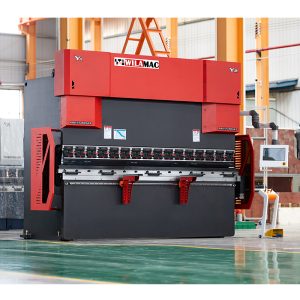
- Recovering machine hours limited by manual handling. If your press brake or laser sits idle while someone loads and unloads, automation converts that idle time back into output.
- Consistency that does not depend on who is on shift. A robot follows the programme. On angle-critical, repeat work, that reduces variation between operators and between shifts.
- Filling shifts you cannot staff. Where skilled operators are hard to recruit, automation can run hours that manual operation cannot cover.
- Removing people from heavy or hazardous handling. Large, heavy or awkward parts are a real injury risk and a real reason to automate.
What automation does not fix
It does not fix low volume with high variety. It does not fix inconsistent drawings. It does not fix a part family that changes every time the customer calls. And it does not fix a shop with no one able to programme and maintain the cell.
Automating a chaotic process produces a faster chaotic process. The capability that makes automation work — repeatability in the work itself — has to be built first, and it is built with standardisation, not with robots.
The readiness test
Before evaluating any cell, answer these five questions honestly. The pattern of answers is more useful than any individual one.
1. Do you have stable part families? If a meaningful share of your volume comes from parts that repeat — the same geometry, or variations of it — automation has something to grip. If every job is a one-off, the setup effort per part will exceed the labour you save.
2. Is your tooling strategy standardised? A robot changes tooling as part of the programme. That only works if tooling positions, heights and set-ups are consistent and documented. If tooling changes depend on operator judgement, the cell inherits that variability.
3. Are your drawings and CAD data clean? Automation depends on programming from data rather than from a drawing interpretation. Flat patterns, bend sequences, tolerances and material specifications need to be accurate and consistent. Garbage in, as ever, produces scrap out — faster.
4. Do you have, or can you hire, the programming skill? Offline programming, cell simulation and gripper design are distinct skills from operating a press brake. They are learnable, but they must exist somewhere in the organisation. Many failed automation projects failed here.
5. Have you identified the actual constraint? Automation applied to a non-constraint produces no throughput gain. If your bottleneck is the laser, automating bending will not help. Map the process, find where parts queue, and automate that.
What a robotic bending cell consists of
Understanding the components helps you see where cost and complexity live.
- The robot and its reach — sized to the largest part and the cell layout, not to an average part
- The gripper or end effector — frequently the most part-specific element, and the one that decides how many different parts one cell can actually handle
- Sheet feeding or magazines — how blanks arrive at the cell determines how long the cell can run unattended
- Tooling and changeover system — whether the cell can change tooling automatically, and how quickly
- Cell guarding and safety systems — including how operators interact with the cell during a run
- Offline programming and simulation software — the tool that makes new parts programmable without stopping production
The gripper and the tooling changeover are where the honest cost of flexibility lives. A cell that handles your top part family easily may struggle with the parts that sit outside it.
Where automation usually starts
Automating the whole process at once is rarely the right first move. A more reliable sequence:
Step 1 — Material handling into the machine. Automatic loading addresses the most common cause of lost machine hours and is usually the entry point with the clearest return.
Step 2 — Part removal and stacking. Removing finished parts is repetitive, and often heavy. This step is frequently where the safety argument and the labour argument both point the same way.
Step 3 — Automated bending. Once the parts, tooling and data are standardised, a bending cell can be added with a much better chance of running as intended.
Step 4 — Line integration. Storage, cutting, bending and welding connected as a coordinated line. This is the largest commitment and should follow a proven internal track record, not precede it.
Each step should be justified on its own numbers. A shop that automates loading and part removal and stops there has often captured most of the available benefit.
Hidden costs and operating requirements
Budget for the following alongside the equipment:
- Programming and simulation software, plus licences and the training to use them
- Gripper design and fabrication for each part family, which is an ongoing engineering cost rather than a one-off
- Floor space, including safe operating zones and access for maintenance
- Maintenance and spares — including the skill to diagnose faults without waiting for a service visit
- Tooling standardisation — the investment in making tooling consistent enough for automatic handling
- Change management — retraining operators into programmer and cell-attendant roles is a genuine project, not a training course
A pragmatic way to decide
Run this test before committing to capital:
- Measure, over a representative period, how many hours your forming machines lose to loading, unloading and waiting
- Identify the part families that account for the majority of that time
- Ask whether those parts are stable enough that a programme written once would still be valid in six months
- Check whether the tooling needed is already standardised and documented
- Confirm who will programme and maintain the cell, by name
If those five answers are clear, automation has a case to make. If any of them is unanswered, the answer is usually to standardise first — which is cheaper than automating, and is a prerequisite either way.
Frequently asked questions
What volume justifies a robotic bending cell? There is no universal figure, and quoting one without knowing your part mix would be misleading. The determining factor is the ratio of repeatable, standardised part families to one-off work, combined with the machine hours you lose to handling. A shop with modest volume but a very stable part family can justify automation before a higher-volume shop with entirely bespoke work.
Can a robot handle varied parts in the same batch? Within limits, if the parts share a family and the gripper is designed for them. The practical constraint is gripper changeover: each additional part geometry either fits the existing gripper or needs a new one. That is what defines the cell’s real flexibility.
Do we need to replace our existing press brake? Not necessarily. Many automation packages are built to interface with existing machines, provided the machine has the necessary interfaces and the tooling strategy is compatible. This should be confirmed machine by machine at the proposal stage.
What is the biggest cause of failed automation projects? The system works and the shop cannot operate it — usually because programming capability, tooling standardisation or data quality were treated as deliverables of the project rather than prerequisites for it.
Next step
If you tell us your forming process, the part families that dominate your volume, and where parts actually queue, we can assess where automation would pay first — and be equally direct about the parts of your operation that should stay manual.
Request an automation assessment →
Browse our production line and automation range: Production Lines & Automation →


