
The single biggest delay in getting a fabrication quote is an incomplete enquiry. When a drawing arrives without a material specification, or a quantity arrives without a tolerance requirement, someone has to ask — and every question adds a day.
This article explains exactly what to send, which file formats we can work from, and how cost is actually built up. If you use it as a checklist, your first enquiry will usually come back as a quotable job rather than a request for more information.
What we need to quote accurately
1. Drawings, in the right format A fully dimensioned 2D drawing is the baseline. A 3D model is better still, because it lets us verify bend sequences and check for interference before quoting rather than after. If you have both, send both.
2. Material and grade “Steel” is not a specification. Tell us the material type and grade, and whether a substitute is acceptable. For stainless and aluminium, the grade matters to both forming behaviour and finish — and to cost.
3. Thickness Give the nominal thickness and the acceptable tolerance. If your design allows a standard stock thickness, say so; it is often the single easiest way to reduce cost.
4. Quantity and batch pattern Not just the total — the breakdown. A one-off prototype, a first batch and a repeat production order are three different quoting exercises. If a repeat programme is expected, tell us, because that changes how tooling and setup are amortised.
5. Tolerances, and which ones matter State the general tolerance and then flag the dimensions that are genuinely critical. Marking a non-functional dimension as tightly toleranced adds cost for no benefit. Marking a critical one loosely is how parts arrive that cannot be assembled.
6. Surface finish and treatment Specify what the part needs: as-formed, deburred, painted, powder coated, plated, anodised, or left raw for a downstream process. Include whether the finish is cosmetic or functional, and note any colour or texture requirement.
7. Bend radii and forming constraints State the required inside radii and whether they are functional or aesthetic. Where a radius is driven by appearance only, we can often work with a standard tool rather than a custom one.
8. Assembly and secondary operations If the part is welded, riveted, tapped, or assembled with other parts, say so and include the mating components. Assembly is quoted as a separate operation, and it needs its own drawing or instruction.
9. Delivery, packaging and destination Where it ships to, how it should be packed, and any labelling or documentation requirements. For export orders, this affects both packaging design and the paperwork, so it belongs in the original enquiry rather than in a later email.
File formats
The formats we can work from, in order of preference:
| Format | Use |
|---|---|
| 3D solid model (STEP, IGES, Parasolid) | Best for verifying formability, bend sequence and fit |
| 2D CAD (DXF, DWG) | Flat patterns or profiles for cutting |
| Dimensioned PDF drawing | Acceptable where CAD data is not available; all dimensions must be legible |
| Assembly drawing or exploded view | Required for welded or multi-part assemblies |
| Photograph or sample part | Useful supplementary information; not a substitute for a drawing |
If you only have a sample part, send it. We can reverse-engineer it — but that is a separate, quotable activity, and knowing it up front is better than discovering it mid-project.
Where the cost comes from
Understanding cost structure is how buyers reduce it without reducing quality. A fabricated part’s price is built from:
- Material — the raw sheet area consumed, including the nesting yield, not just the finished part area
- Cutting — laser or shear time, driven by profile complexity, material and thickness
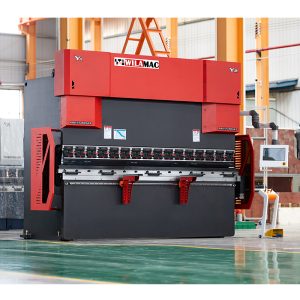
- Forming — press brake time, driven by the number of bends and the setup required
- Tooling and setup — whether existing standard tooling can be used or something has to be made
- Secondary operations — welding, tapping, deburring, assembly
- Finishing — the treatment specified, which often carries its own minimum batch economics
- Inspection — what level of verification the part requires
- Packaging and freight — which for export orders is rarely negligible
Design choices that reduce cost
- Use standard material thicknesses where the design allows
- Do not over-tolerate. Specify tight tolerances only where function requires them
- Keep bend radii practical relative to material thickness, so standard tooling can be used
- Think about bend sequence and punch access early. A design that requires an unusual tool or a rearrange-and-rebend sequence costs more than one that does not
- Consolidate parts where possible — fewer parts means less cutting, fewer setups and less assembly
- Tell us the function. If we know what the part does, we can suggest alternatives rather than simply quoting what was drawn
How the quoting process works
The sequence is straightforward, and knowing it helps you plan:
- You send the package using the checklist above
- We review manufacturability and come back with any design-for-manufacture points — this is where cost is sometimes removed before the quote is issued
- You receive a quotation covering unit price, quantity breaks, lead time, tooling if applicable, and the assumptions the price is based on
- We confirm the details that affect the price — material availability, finishing specification, delivery terms
- First article or prototype where required, before volume production
If a quotation is based on assumptions, those assumptions should be written down. That protects both sides if the specification shifts later.
What slows an enquiry down
These are the gaps that turn a two-day quote into a two-week conversation:
- A drawing without a material or grade
- A quantity without a batch pattern
- Tolerances marked only as “general” on a part with a critical fit
- A finish specified by trade name without the standard or colour reference
- A welded assembly supplied without the mating parts
- No indication of destination, which leaves the freight and export documentation open
Frequently asked questions
Can you quote from a hand sketch? We can, but for anything beyond a simple part the quote will carry assumptions. A dimensioned drawing will always produce a more reliable price, and often a lower one, because it removes the need to over-estimate unknowns.
Do you work from customer-supplied material? This is a commercial decision best discussed directly, since it affects how responsibility for material defects is allocated. Raise it in the enquiry rather than assuming either way.
How do you handle prototype quantities? Prototypes are quoted on their own basis, because setup and tooling cannot be amortised across volume. Where a production programme is expected, tell us at the prototype stage — the quoting approach can often be structured to recognise it.
What if the part cannot be made as drawn? We will tell you, and propose what can be made instead. A supplier who quotes an unmakeable part to win the order costs you more in the end than one who raises the question at the quotation stage.
Next step
Send your drawing package using the checklist in this article. If some items are unknown, send the drawing anyway and tell us which — we would rather start the conversation than wait for a complete pack.


