
Hydraulic Shearing Machine
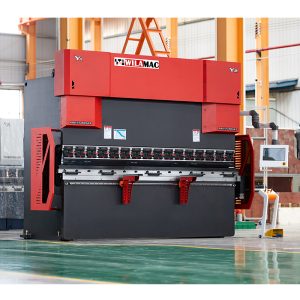
Guillotine and swing beam hydraulic shearing machines for cutting mild steel, stainless steel and aluminium sheet. Built to your cutting length, thickness capacity and production rate — not to a fixed catalogue specification. Tell us your material mix and cut list, and we will size the machine for the job.
| Machine Type | Hydraulic shearing machine |
|---|---|
| Cutting Method | Guillotine or swing beam |
| Drive | Hydraulic |
| Cutting Length | Built to order |
| Thickness Capacity | Material-dependent — confirmed at quotation |
| Backgauge | NC or CNC, depending on configuration |
| Hold-Down | Hydraulic |
| Application | Sheet metal cutting and blanking |
| Configuration | Manufactured to order |
|---|---|
| Customisation | OEM and ODM supported |
| Blades | Selected for your dominant material |
| Price | Quotation only |
| Lead Time | Confirmed at quotation |
Two machine families, two different jobs
A hydraulic shearing machine holds a blade in a moving beam and drives it through the
sheet with hydraulic cylinders. That much is common to every shear. The choice that
actually decides your cut quality is which family you buy.
| Guillotine shear | Swing beam shear | |
|---|---|---|
| Blade path | Blade travels vertically; the cut is straight | Blade travels a curved arc |
| Rake angle | Lower, typically steeper adjustment range | Higher fixed-style rake |
| Cut edge | Cleaner, less distortion on narrow strips | Prone to bowing on narrow cuts |
| Narrow strip cutting | Good | Limited — the arc pushes the strip sideways |
| Typical use | Thicker plate, precise blanks, strip work | General sheet work, cost-sensitive shops |
| Machine cost | Higher | Lower |
If you cut a lot of narrow strips, or you are blanking parts that go straight into a
press brake, the guillotine is usually the correct answer. If you are cutting general
sheet to size, a swing beam machine does the same job for less money.
What determines the machine you need
Cutting length
The throat width sets the longest cut you can make in one stroke. It is the single
hardest specification to change later, so it is worth sizing for the widest sheet you
expect to handle in the next few years, not just today’s jobs.
Thickness capacity — and why it is always material-dependent
Shear force scales with the shear strength of the material, not with its thickness
alone. A machine rated for a given thickness in mild steel will not cut that same
thickness in stainless, which requires substantially more force. Always specify
thickness capacity together with the material. A rating quoted without a
material is not a specification.
Rake angle
The rake angle is the slight tilt of the blade that makes the cut progressive rather
than simultaneous across the full length. A larger rake reduces the peak force required
(predictable on thinner machines) but increases the tendency of the offcut to curl.
Adjustable rake lets you trade between the two.
Backgauge
The backgauge positions the sheet for repeat cuts. Its travel range determines the
widest strip you can set automatically, and its control type determines how repeatable
your production is. NC backgauges cover most job-shop work; CNC backgauges with
programmable stop sequences are what make short-run production economic.
Hold-down system
Hydraulic hold-downs clamp the sheet along the cut line before the blade descends.
Inadequate hold-down is the most common cause of a shear cutting a curved edge.
Blade material and edge geometry
Blades are consumables with a finite number of cuts between regrinds. Blade steel
grade and edge geometry should be chosen for your dominant material — the same blade
that lasts well in mild steel is the wrong choice for heavy stainless work.
Where these machines are used
- HVAC and ductwork fabrication
- Steel structure and fabrication shops
- Elevator and escalator panel production
- Electrical enclosures and switchgear cabinets
- Signage and architectural metalwork
- General job-shop sheet metal work
What we need to quote accurately
- Material type or mix (mild steel, stainless, aluminium, other)
- Maximum and typical thickness
- Maximum cut length required
- Narrowest strip you cut regularly
- Annual or monthly volume, and typical batch size
- Available power supply (voltage, phase)
- Whether you need NC or CNC backgauge programming
Send these and we will come back with a machine configuration, not a generic price list.
Service and support
WILAMAC machines are supplied with installation and commissioning support, operator
training, a spare parts channel and technical support for the life of the machine.
Because we also manufacture press brake tooling and accessories, consumables and wear
parts come from the same supplier as the machine.