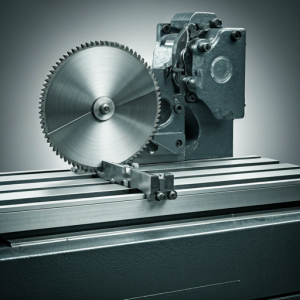

Sheet Metal Fabrication Production Line
Integrated sheet metal fabrication lines and robotic bending cells — blanking, bending, handling and welding combined into a single flow. Automation pays off against a part family and a volume, not against optimism. We start by checking whether your work fits the conditions that make a line economic, and tell you honestly if it does not.
| System Type | Integrated sheet metal fabrication line |
|---|---|
| Configuration | Bending cell, cut-to-bend flow, coil-to-part or full line |
| Integration | Blanking, bending, welding and material handling |
| Handling | Manual or robotic, depending on the part family |
| Control | Line controller with offline programming and simulation |
| Safety | Guarding, light curtains and safety relays |
| Application | Repeat production of a stable part family |
| Basis of Specification | Part drawings and annual volumes |
|---|---|
| Feasibility | Automation readiness assessed before quotation |
| Customisation | OEM and ODM supported |
| Price | Quotation only |
| Lead Time | Confirmed at quotation |
What a production line actually is
A sheet metal production line links individual operations into a continuous flow so
that material moves without being manually re-handled, re-fixtured and re-queued at
every step. The operations themselves are unchanged — cutting, bending, welding,
assembly. What changes is the material handling between them, and that is where both
the cost and the return sit.
Typical line configurations
| Configuration | What it links | Fits when |
|---|---|---|
| Bending cell | Press brake + robot + part magazine | One part family, high repeat volume |
| Cut-to-bend flow | Laser or punch + buffer + press brake | Mixed parts, short cycle, one operator |
| Coil-to-part line | Decoiler + leveller + roll former + shear | Long runs of a single profile |
| Full fabrication line | Blanking + bending + welding + handling | Stable, high-volume product family |
Higher integration is not automatically better. Each added stage removes labour but
also removes flexibility, and the line only pays back on work that repeats.
The three conditions automation actually needs
1. A part family, not a part list
Automation needs parts that share handling geometry, bend sequences and cycle times.
A robot programmed to pick and bend one part does not care how many customers ordered
it — but it cannot switch to a completely different part without setup. Sort your
order book into families before you consider a cell.
2. Volume below the payback threshold is a loss
The real question is not “how much labour will this save” but “how many hours per
week will this cell actually run loaded”. A cell that runs two shifts a day pays back;
the same cell running four hours a day usually does not, and the capital cost sits on
the balance sheet either way.
3. Upstream consistency
Automation amplifies whatever variation reaches it. If blank dimensions vary, a robot
will either mis-grip or mis-load, and a line that stops constantly is worse than a
manual cell. Blanking quality and part consistency must be solved before the
line, not by it.
The costs that get left out of the proposal
- Programming and offline simulation software, plus the engineer to run it
- Part magazines, grippers and end-effectors — often part-specific
- Safety fencing, light curtains and guarding, and the floor space for them
- Compressed air, power and foundation work
- Operator retraining, and the output dip while the line is commissioned
- Ongoing maintenance and spares for the automation, which has a different failure profile from the machine tools
What we need to assess your case
- Part drawings or a representative sample of the part family
- Annual volume and batch size per part
- Current process steps, cycle times and labour content
- Available floor space and layout constraints
- Shift pattern and realistic loaded hours for a new cell
- Existing machines the line would need to integrate with
Service and support
WILAMAC supports line projects from specification through installation,
commissioning, operator training and after-sales service, drawing on the same press
brake, shearing and tooling range that the line is built around.
Related Products