



Technical Resources for Sheet Metal Fabrication
Bend calculations, tooling selection, machine sizing and the practical answers buyers ask before ordering a press brake, shear or laser. Written by the people who build the machines.
Sheet Metal Fabrication FAQs
Can you make tooling to my part drawing?
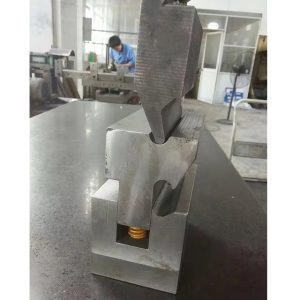
Yes, that is the core of what we do. We grind punches and dies to the geometry of your part rather than bending around a stock die, so the bend allowance matches the material you actually buy.
What tooling do you make?
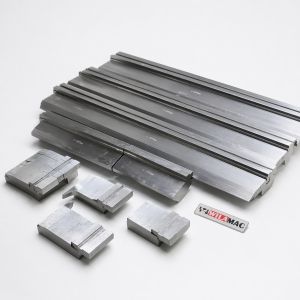
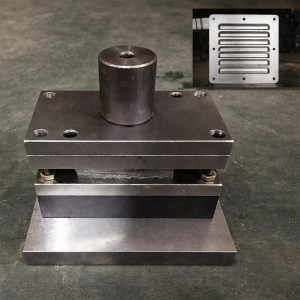
Gooseneck punches for clearance over a return flange, segmented punches for short flanges and box work, louver punch dies, multi-V dies and hinge tooling. Sharp and reduced-radius tooling for cosmetic bends is also available. Each type has its own page: louver punch dies, hemming dies, hinge curling punches and dies and segmented dies.
What is 42CrMo and why does it matter?
42CrMo is a chromium-molybdenum alloy steel. Through-hardened, it holds hardness at the punch tip under repeated loading, so the tip does not mushroom and the die shoulder does not wear a groove. Cheaper carbon steel tooling deforms earlier, and you see it as a bend angle that drifts over a production run.
Why does a die mark appear on a visible face?
The die shoulder is pressing into the surface, usually because the V opening is too narrow for the thickness or the shoulder is worn. A wider opening, a larger shoulder radius or a protective film solves it. On polished stainless and pre-painted sheet, plan the tooling for it before the job, not after.
How long does custom tooling take?
It depends on geometry and heat treatment, and it usually runs alongside the machine build. Send the part drawing with material and thickness and we will confirm a date rather than guess one.


