
Press Brake Accessories & Spare Parts
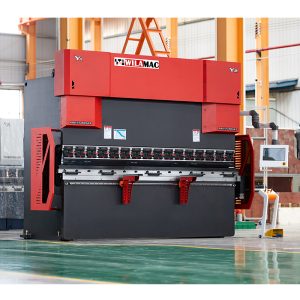
Wear parts, accessories and spares for press brakes — from backgauge fingers and quick-clamp assemblies to crowning systems, hydraulic components and safety equipment. Send us the machine model and a photo of the part and we will identify it.
| Tooling Interfaces | Punch holders, die holders, adapters and quick-clamp assemblies |
|---|---|
| Backgauge | Fingers, finger plates, ball screws, linear guides and servo motors |
| Hydraulics | Seal kits, hoses, pumps, valves and filters |
| Crowning | Mechanical, hydraulic and CNC crowning components |
| Control and Electrical | Pendants, foot switches, sensors and relay modules |
| Safety | Light curtains, safety relays and guarding |
| Identification | Machine model, control model and a photo of the part |
|---|---|
| Dimensions | Bore, stroke, thread or mounting geometry where applicable |
| Obsolete Parts | Closest current equivalent proposed where the original is discontinued |
| Price | Quotation only |
| Lead Time | Confirmed at quotation |
Why spares are a production decision, not a purchasing one
A press brake that is waiting for a part is not a machine, it is floor space. The cost
of a worn backgauge finger or a leaking seal is never the price of the component — it
is the hours of bending capacity that stop while the part is sourced. For repeat
production this usually exceeds the part cost by an order of magnitude.
What falls into this category
Tooling interfaces and clamping
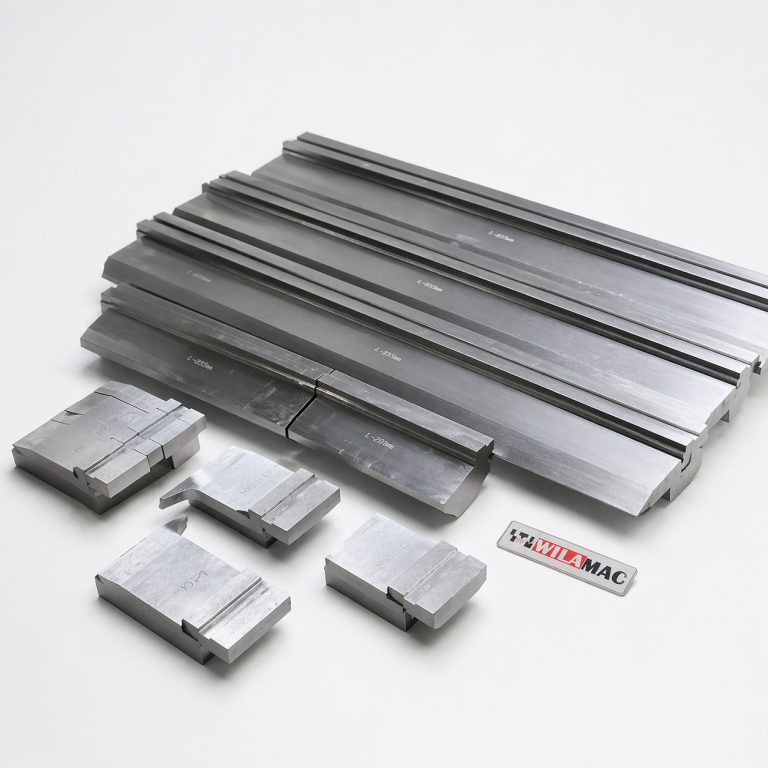
- Punch holders, die holders and intermediate adapters
- Quick-clamp assemblies and clamping levers
- Segmented punch and die holders for box and return bending
- Tooling locating pins, keys and alignment stops
Backgauge and positioning
- Backgauge fingers, finger plates and finger extensions
- Ball screw, linear guide and drive components
- Servo motors and encoder assemblies
- Stop blocks and sheet-support arms
Hydraulic and drive components
- Seal kits, O-rings and hydraulic hoses
- Hydraulic pumps, valves and proportional valves
- Oil filters and reservoir components
- Cylinder seals and guide rings
Crowning systems
- Mechanical crowning wedges and adjustment components
- Hydraulic crowning cylinders and seals
- CNC crowning control components
Control and electrical
- Control pendants and operator panels
- Foot switches and two-hand control stations
- Sensors, limit switches and relay modules
- Inverter and contactor replacements
Safety equipment
- Light curtains and safety relay modules
- Laser safety systems for bending
- Guarding, side fences and rear guards
How to identify the correct part
Press brake components vary between manufacturers and between generations of the same
model, so a description alone is rarely enough. To identify a part accurately we need:
- Machine model and, if available, the serial number — this is the
fastest route, because it pins down the generation of the machine - The control model, if the part is electrical or relates to the CNC system
- A photo of the part, in place if possible, showing how it mounts
- Dimensions — bore, stroke, thread or mounting hole spacing, whichever applies
- Quantity, and whether you want a single replacement or a stocked spare
Where the original part is obsolete, we will tell you that directly and propose the
closest current equivalent rather than supplying something that nearly fits.
Stocking strategy
Not every part is worth holding on the shelf. A practical approach is to classify by
failure consequence rather than by price:
| Class | Examples | Approach |
|---|---|---|
| Stops production, long lead time | Pumps, servo drives, control modules | Hold one spare on site |
| Stops production, short lead time | Seal kits, hoses, fingers | Hold consumable stock |
| Degrades quality gradually | Backgauge fingers, sheet supports | Replace at inspection |
| Safety-related | Light curtains, safety relays | Never run on a known-faulty unit |
Service and support
Because WILAMAC manufactures press brakes, press brake tooling and accessories, wear
parts and tooling come from the same supplier as the machine — which matters when
you are matching an interface and need both sides to fit.
Related Products