

Technical Resources for Sheet Metal Fabrication
Bend calculations, tooling selection, machine sizing and the practical answers buyers ask before ordering a press brake, shear or laser. Written by the people who build the machines.
Sheet Metal Fabrication FAQs
Which shears do you build?
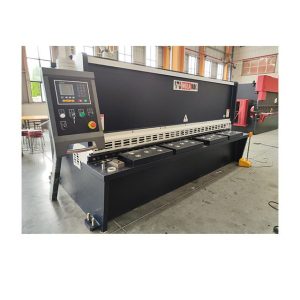
The QC12Y swing-beam shear and the QC11K guillotine shear, for example the QC11K 2500 mm hydraulic guillotine. Length and thickness are built to order. Specifications for the swing-beam and guillotine machines are on their product pages.
QC12Y or QC11K: which one do I need?
QC12Y is a swing-beam shear: the upper blade swings through an arc, which is simple, robust and well suited to thin and medium plate. QC11K is a guillotine: the blade travels vertically with an adjustable rake angle, which suits thicker plate and narrow strips and distorts the cut edge less.
How do I set blade clearance?
As a starting point, roughly 7% of material thickness for mild steel, a little more for stainless and a little less for aluminium. Use the clearance chart for your machine and blade rather than a single number: too much clearance gives burr and roll-over, too little wears the blade edge and can crack it.
Why is my cut edge burred or curved?
Usually blade clearance, blade condition or hold-down pressure. Excessive clearance produces burr and a rolled edge; a dull blade tears rather than shears. Narrow strips curl when the rake angle is set too high for the thickness.
Can I cut stainless and aluminium on the same shear?
Yes, but not at the same blade clearance. Stainless needs more clearance and more force; aluminium needs less clearance and a sharp, polished edge to avoid smearing. Keep a clearance chart at the machine and reset it when you change material.


