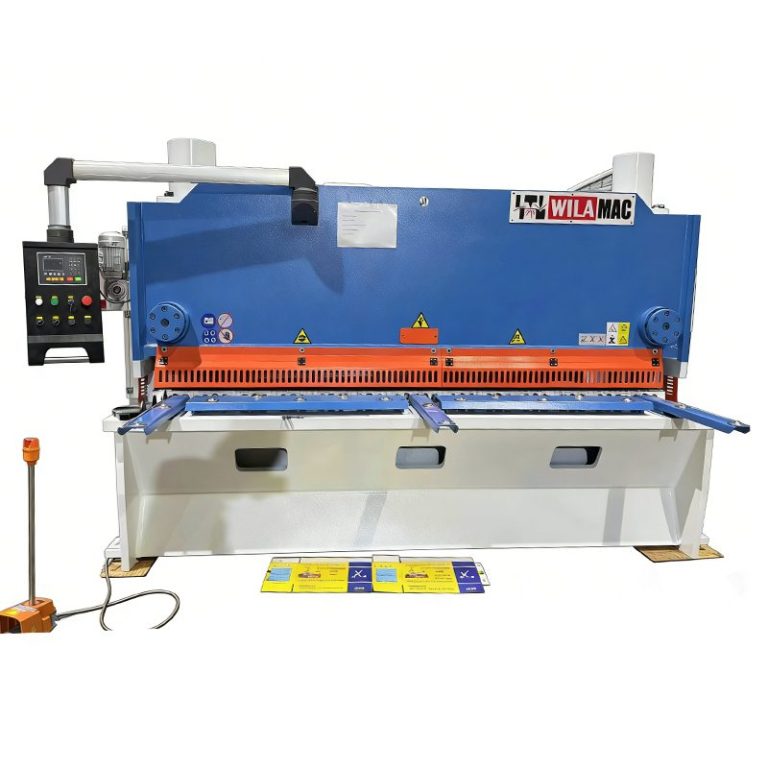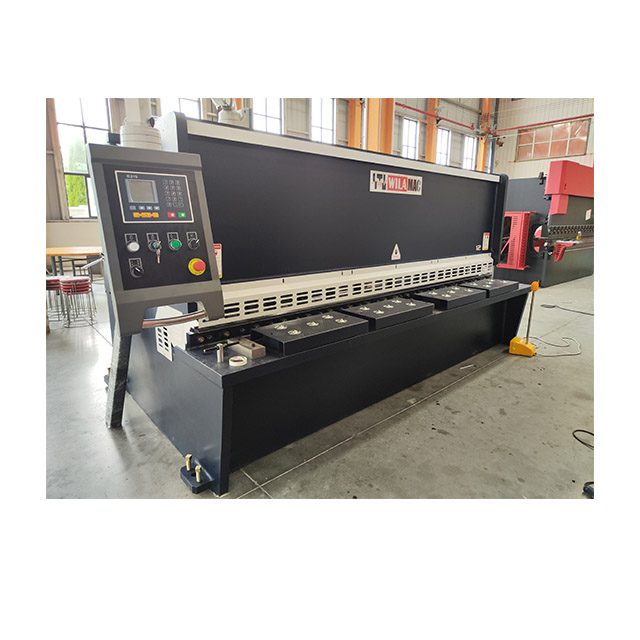

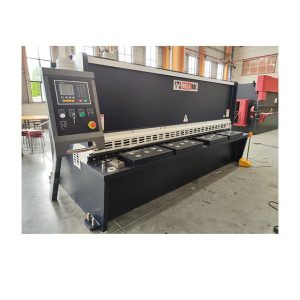

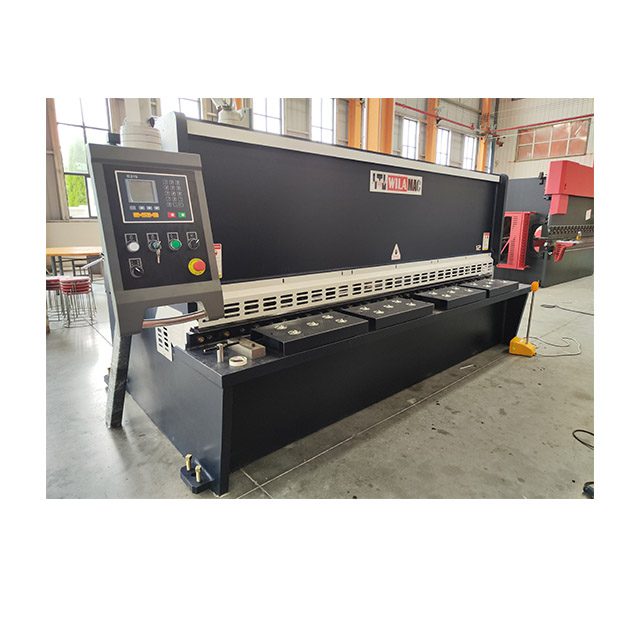
QC12Y 10 × 3200 Hydraulic Swing Beam Shearing Machine
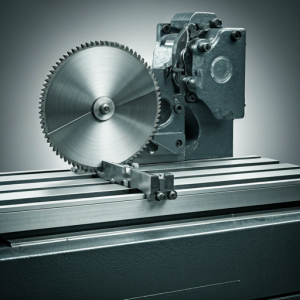
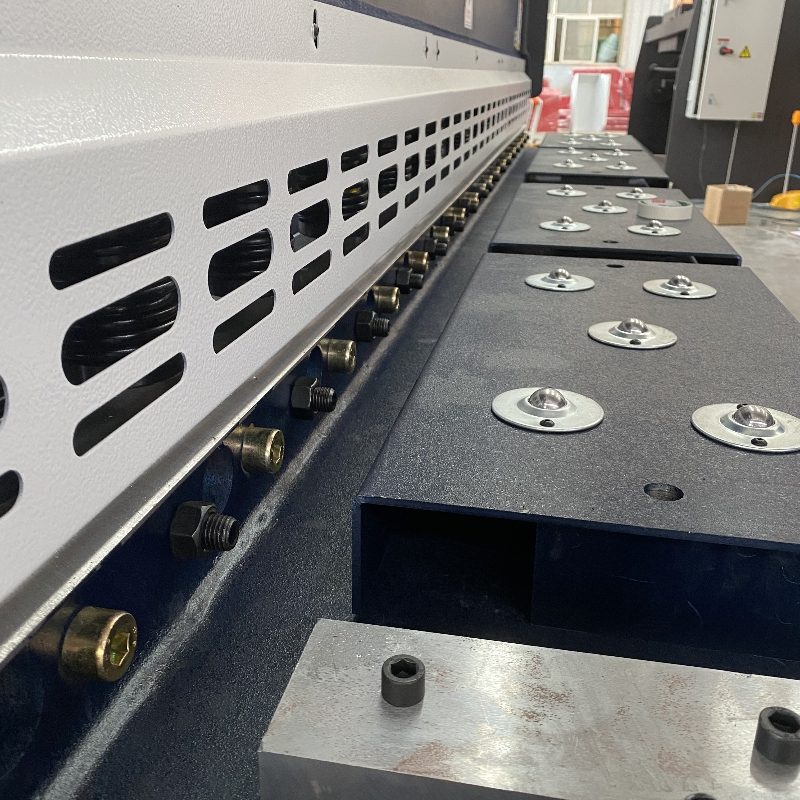
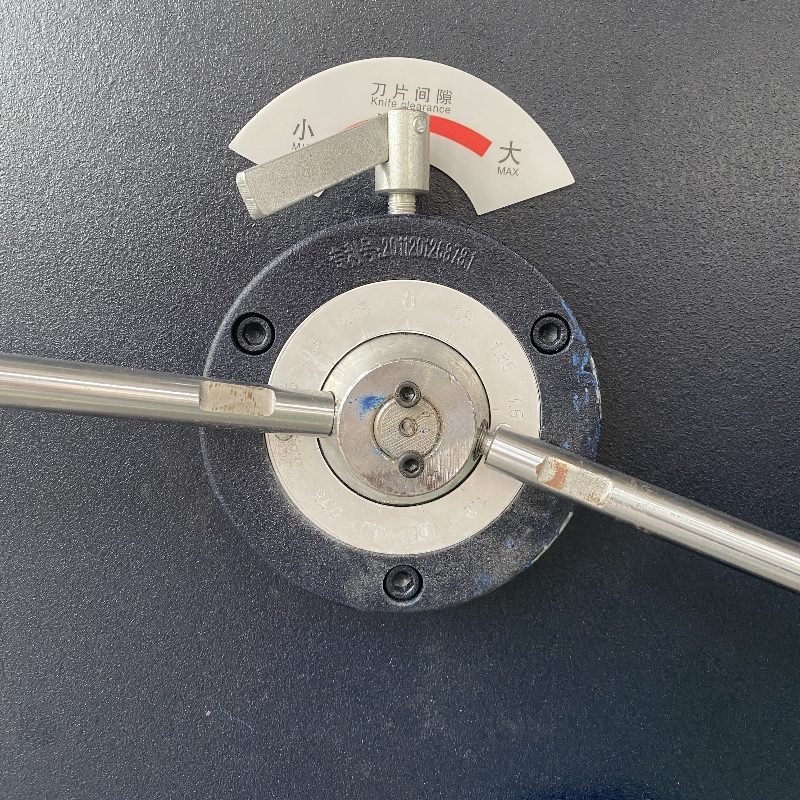
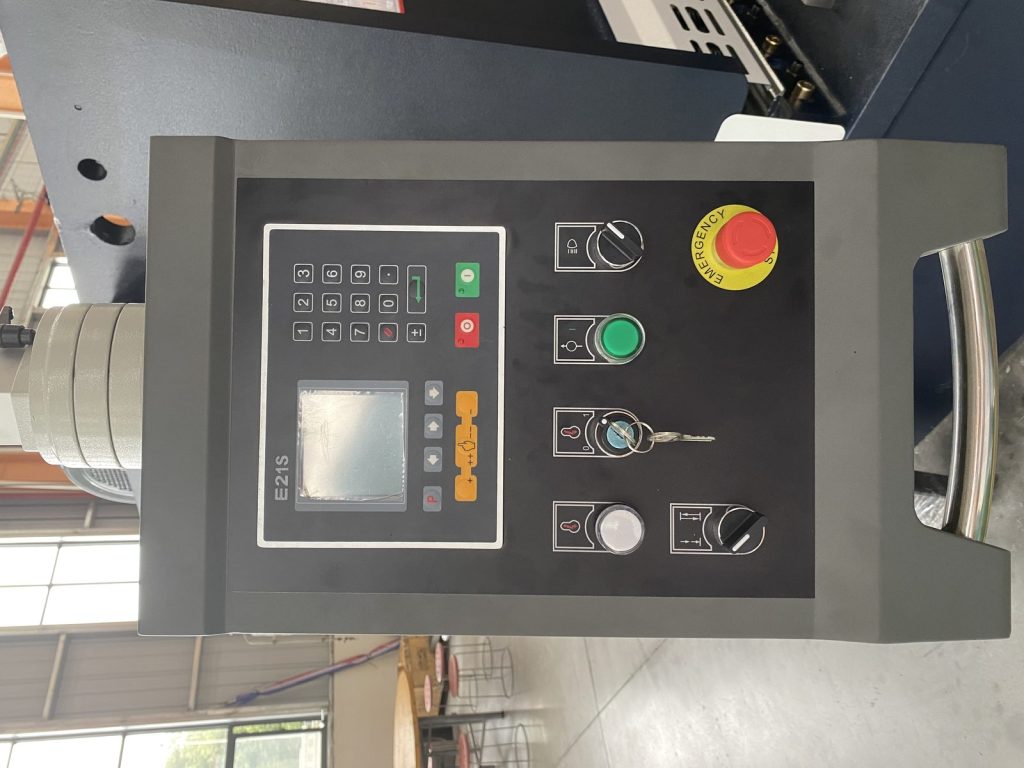
QC12Y is the swing beam shear in our range. Where a guillotine drives the blade straight down inside vertical guides, a swing beam carries the blade on an arc through the cut. The practical difference shows up on thin and coated material: the curved path needs less force, distorts the sheet less and leaves a cleaner edge, which is why swing beam machines are common on lighter gauge work and on material that shows every marking. This build runs a hydraulic drive with a 10–800mm motorised backgauge, a 2.14° shearing angle and an Estun E21S numerical control. It is CE marked and supplied with a machinery test report and outgoing inspection video. Cutting capacity is quoted at 10 × 3200mm from the factory listing — if your work is thicker or shorter, tell us the material and the thickness range and we will confirm the right build before quoting.
| Machine Type | Hydraulic swing beam shearing machine (QC12Y series) |
|---|---|
| Cutting Capacity | 10 × 3200 mm (thickness × width) |
| Cutting Mechanism | Swing beam: blade carrier travels on an arc through the cut |
| Drive | Hydraulic |
| Automation | Semi-automatic |
| Shearing Angle | 2.14° |
| Backgauge Travel | 10–800 mm |
| Throat Depth | 300 mm |
| Control System | Estun E21S numerical control |
| Certification | CE |
| Application | Manufacturing plant, construction works |
| Condition | New |
| Machinery Test Report | Provided |
| Video Outgoing-Inspection | Provided |
| After-sales Service | Field installation, commissioning and training |
| After Warranty Service | Spare parts |
| Place of Origin | China |
| Brand | WILAMAC |
| Minimum Order Quantity | 1 |
Swing Beam or Guillotine?
Both shears cut sheet with a straight blade. The difference is how the blade gets to the cut.
A guillotine holds the blade in vertical guides and drives it straight down. A swing beam pivots the blade carrier, so the blade travels through the material on an arc. Because the arc is gradual, the blade is not forced through the full section all at once — the cut starts and progresses instead of shearing the whole thickness in one instant.
In practice that means a swing beam machine needs less force for the same thickness, deflects the sheet less, and leaves a cleaner edge with less distortion. It is the reason swing beam shears are the usual choice for thinner gauges, for coated or polished material where marking matters, and for shops that cut a lot of sheet but not much plate.
A guillotine still wins when the work is thick and the priority is raw capacity. If your thickness range straddles both, that is the first question to answer before choosing a model.
Specifying a QC12Y Shear
Cutting capacity is a pair of numbers, not one. Thickness and width have to be read together: a shear rated 10 × 3200mm cuts 10mm across a 3200mm width, and neither number means much on its own.
What to send us:
- Material and the thickness range you actually cut, including the thickest
- Maximum sheet width you load
- Whether you cut coated, polished or painted sheet, where a swing beam has the advantage
- How much of the work needs a motorised backgauge versus a manual stop
- Voltage, phase and the floor space available
- Whether you need a squaring arm, front support arms or a sheet support system
Send us those and we will confirm the capacity, the control and the accessories before quoting.
Related Products